Cassava in Vietnam
Cassava plays an important socio-economic role as a secondary crop in Viet Nam. In the north the crop is an important source of food and feed at the household level; in the south mainly as a source of cash income. In South Viet Nam cassava is predominantly used as a raw material for processing into a wide range of products, both at the household and small-scale processor level, generating employment in the rural sector.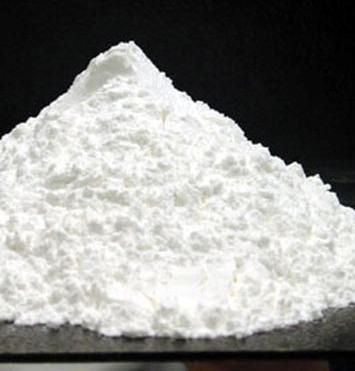
Cassava is among the four most important food crops in Vietnam (rice,maize,casava,sweet potato) and also is water- use efficient bio-energy crop. Cassava now an important source of cash income to small farmers. Cassava chips and starch is being produced competitively.
In Viet Nam about 66% of cassava is grown on Utisols, 17% on Inceptisols, 7% on Oxisols, 4% on Alfisols, 3% on Entisols and 2% on Vertisols. The soil pH hhhhH+HhhhhhHHgenerally varies from 4.5 to 6.0. In North Viet Nam, cassava is grown mainly in areas with hilly topography and about 68% of the cassava growing area has a rocky soil. while 12% have sandy soils, respectively. In South Vietnam cassava is grown mainly sandy-grey soils, these soils are flat and poor in nutrients, of the Central Coastal and the Southeast region, accounts for about 60 % of the total cassava area of the South. While more than 30% cassava is grown in the Central Highlands and Dong Nai, Binh Phuoc of Southeast region on red yellow soils with hilly topography. Due to these marked differences in cassava soil characteristics, research in the north should concentrate on erosion problems and soil fertility enhancement. Whereas in the south research on cassava variety improvement, soil fertility enhancement and conservation by using intercropping systems is of highest priority.
Table 1: CASSAVA PRODUCTION AREA AND YEILD IN VIETNAM
|
|
Area
(million ha)
|
Yeild
(million tons)
|
|
1996
|
275.6
|
2067.2
|
|
1997
|
254.4
|
2403.4
|
|
1998
|
235.5
|
1773.4
|
|
1999
|
225.5
|
1800.5
|
|
2000
|
237.6
|
1986.3
|
|
2001
|
292.3
|
3509.2
|
|
2002
|
337.0
|
4438.0
|
|
2003
|
371.9
|
5308.9
|
|
2004
|
388.6
|
5820.7
|
|
2005
|
425.5
|
6716.2
|
|
2006
|
475.2
|
7782.5
|
|
2007
|
495.5
|
8192.8
|
|
2008
|
554.0
|
9309.9
|
|
2009
|
507.8
|
8530.5
|
|
2010
|
498.0
|
8595.6
|
|
2011
|
560.1
|
9875.5
|
|
2012*
|
500
|
9000
|
Table 2. Cassava planted area (1,000 ha) in regions of Vietnam 1995 – 2009
|
Regions
|
1995
|
2000
|
2005
|
2006
|
2007
|
2008
|
2009
|
|
Red River Delta
|
10.9
|
9.9
|
8.5
|
8.4
|
8.8
|
7.9
|
7.9
|
|
North Mountainous
|
80.4
|
82.1
|
89.4
|
93.7
|
96.5
|
110.0
|
110.0
|
|
Central Coast
|
94.0
|
83.8
|
133.0
|
140.3
|
151.2
|
168.8
|
170.0
|
|
Central Highlands
|
32.6
|
38.0
|
89.4
|
125.9
|
129.9
|
150.1
|
150.0
|
|
Southeastern
|
49.3
|
16.1
|
98.8
|
100.9
|
102.9
|
113.5
|
115.0
|
|
Mekong Delta
|
10.2
|
7.7
|
6.4
|
6.0
|
6.2
|
7.4
|
7.5
|
|
Total of Vietnam
|
277.4
|
237.6
|
425.5
|
475.2
|
495.5
|
557.7
|
560.4
|
Table 3. Cassava production (1,000 tonnes) in regions of Vietnam 1995 – 2009
|
Regions
|
1995
|
2000
|
2005
|
2006
|
2007
|
2008
|
2009
|
|
Red River Delta
|
79.0
|
87.9
|
92.4
|
93.7
|
102.9
|
102.1
|
105.5
|
|
NorthMountainous
|
606.3
|
678.5
|
986.8
|
1,070.8
|
1,132.3
|
1,328.0
|
1,330.0
|
|
Central Coast
|
602.1
|
645.9
|
1,855.9
|
2,167.6
|
2,359.9
|
2,808.3
|
2,810.0
|
|
Central Highlands
|
283.7
|
351.5
|
1,446.6
|
2,058.8
|
2,090.4
|
2,356.1
|
2,400.0
|
|
Southeastern
|
560.8
|
154.3
|
2,270.5
|
2,327.4
|
2,434.4
|
2,694.5
|
2,700.0
|
|
Mekong Delta
|
79.6
|
68.2
|
64.0
|
64.2
|
72.9
|
106.8
|
110.0
|
|
Total of Vietnam
|
2,211.5
|
1,986.3
|
6,716.2
|
7,782.5
|
8,192.8
|
9,395.8
|
9,455.0
|
Planting method: Most farmers in Viet Nam plant stakes horizontally (76% in the north, 68% in the south). This planting method is suitable mainly on poor soils with thin surface soils. This method maintains adequate moisture in the stakes for sprouting and for root development at the early stage. Vertical planting is used by farmers of a few provinces, such as Quang Binh, Quang Nam, Da Nang and Lam Dong, where the planting is done at the end of the wet season with heavy rain and high moisture content in the soil. In many regions, mainly in the Central Coastal Region and the Central Highlands, farmers plant stakes in a slanted position to combine the advantages of the two previous planting methods. In a slanted planting position, cassava has a relatively good root development, it can take full advantage of the soil depth and generally produces high yields, especially in areas where the surface soil is deep. Slanted planting is done mainly in Quang Nam, Da Nang (71.0% of farmers), Quang Binh (72.5%), Nghe An, Ha Tinh (45.9%) and Lam Dong (40%).
Plant population and spacing: Cassava is planted at various spacings depending on the region. Most of the farmers use a spacing between rows of 50–100 cm and between plants in the row of 50–100 cm. In some provinces, farmers adopt a wider spacing (in the North Mountainous Region and the Central Highlands) due to a thicker surface soil layer. In contrast, in some provinces, such as Ha Bac, Tay Ninh, Quang Ngai and Song Be, a closer spacing (50 × 50 to 100 × 50 cm) is used because of poor soils. Therefore, the cassava plant density in these provinces increases up to 20 000–25 000 plants/ha, whereas in Ha Giang, Tuyen Quang, Cao Bang, Bac Can, Lang Son, Dac Lac, Lam Dong and Khanh Hoa a plant density of less than 15 000 plants/ha is generally used.
Fertilization: Cassava grows rather well on poor soils but to produce high yields the crop requires a large amount of nutrients. To maintain high yields it is necessary to maintain the fertility of the soil. Otherwise, with time, soils will become poorer and cassava yields will decrease. In some provinces of the Red River Delta and the Central Coastal Regions farmers apply 5–7 tonnes of manure per hectare. But in other areas the amount of manure applied is generally much lower (less than 2 t/ha). Fertilizer N is applied to the cassava fields at a rate of 0–50 kg N/ha; highest rates are applied in the provinces of the Red River Delta, the South Central Coast and the Southeastern Region, especially in Tay Ninh. The average K application rate for the whole country is only about 19 kg K2 O/ha. However, a higher rate of 30–90 kg K2 O/ha is used in Ha Bac, Hai Hung, Ha Son Binh and Tay Ninh provinces. A rate of 50–100 kg K2 O/ha is generally needed to replace the K removed in the root harvest. Due to the abundant availability of single superphosphate in the north, P is applied to cassava at a fairly high rate of 15–30 kg P2 O5/ha in some provinces of the North Mountainous Region, in the Red River Delta and in the North Central Coast. A similar P rate is also used in Tay Ninh province of the Southeastern Region. However, in other parts of the North Mountainous Region, the South Central Coast and the Central Highlands, P application rates are very low. In general, chemical fertilizers are applied to cassava fields at low rates. Due to a lack of resources, farmers usually apply fertilizers only to other crops. When the cassava price fluctuates and their income from cassava production is not stable, they can not afford to apply large amounts of fertilizers to cassava. Thus, the application of nutrients to cassava soils in the form of animal manure and through intercropping with grain legumes can play a significant role in increasing cassava yields and maintaining soil fertility.
Weeds, diseases and pests. Weeds cause a decrease in cassava yield by competing for light, water and nutrients, especially in the rainy season and at the early growth stage. Weed control is done up to four times, mainly by hand, using a hoe. Most farmers weed two-three times during a crop season. Due to the high temperature all through the year in the south, the number of weedings in that region is slightly higher than in the north. The last weeding is done when cassava is about four months old and the crop canopy completely shades the ground. No herbicides are used to control weeds in cassava fields.
Diseases and insects are not very important in cassava and no serious damage to cassava production has been reported. Most farmers do not report the presence of any insect pests in cassava. Only mites are reported to damage young cassava plants in the Central Coastal Region of the north, but the area affected is limited. The principal cassava diseases are cassava bacterial blight (caused by Xanthomonas manihotis) and Cercospora leaf spot (caused by Cercospora sp.).No good control means are available except the use of clean planting material and resistant varieties. A study in 1968 in Viet Nam reported 19 diseases on cassava caused by different pathogens, but none are of economic importance.
Intercropping: In the north, cassava is generally planted in monoculture. After many years of cassava monoculture, soil productivity is often reduced due to erosion and nutrient exhaustion, resulting in a decrease of cassava yields. Cassava-based intercropping systems in the north occupy less than 10% of the area, while in the south, this area reaches 30–40%. In Binh Thuan , Ninh Thuan, Gia Lai, Kon Turn, Dac Lac and Dong Nai provinces, the area under intercropping with cassava is as high as 70–90%. Generally, maize, groundnut, black bean and mungbean are used as intercrops with cassava. Besides these, cashew nut, fruit trees, vegetables, soybean and winged bean are also intercropped with cassava, but to a lesser extent. Although we can show the good effect of cassava-based intercropping systems on soil conservation, most farmers are concerned only with the economic aspects of the intercropping systems.
Harvesting: Harvesting time is an important factor affecting cassava yield. If the farmer harvests too early, cassava is still young, and the starch content and yield are low. In areas where cassava is grown for fresh human consumption, farmers harvest from six to seven months after planting up to complete maturity (at 11–12 months). When cassava is consumed as boiled fresh roots, farmers in some areas harvest cassava at less than 6 months after planting. However, the majority of cassava is harvested after 10–12 months, especially in the south, where the processing of cassava into different products requires a high starch content in the roots .


