Export markets for cassava and cassava products in Vietnam
Export markets for cassava and cassava products in Vietnam
In about 10 years ago, in Vietnam cassava was from a secondary food crops, industrial crops became important, with acreage, yield and production increased rapidly. Cassava is grown in the North Central, South-Eastern and Central Highlands provinces of Kon Tum, Gia Lai, Dak Lak and Dak Nong.
The total area of the national cassava production in 2012 reached 560,000 ha with total production of fresh cassava tubers reach about 9.5 million tons. The products are exported include cassava starch, cassava chips and cassava processing alcohol. With more than 100 large power plants and hundreds of manual processing, most concentrated in Tay Ninh Province, the industrial processing of cassava starch for production of 1 million tons / year.
Exports of cassava and cassava products
Cassava and cassava products is export economic boom in recent years, after demand for imports from the Chinese market and Taiwan surged. Vietnam is the world's second largest exporter of cassava and cassava products, after Thailand. The cassava products have joined the commodity group exports more than $ 1 billion / year. According to statistics from the General Administration of Customs, 2012, Vietnam exported more than 4.2 million tons of cassava product types worth $ 1.35 billion, an increase of over 57% and nearly 41% in value to 2011. 2012, the volume of cassava and cassava products exported record, in which the main import markets are strong: China rose 65.1% in volume and 66.6% in value treatment; South Korea increased by 11.4% in volume and 5% in value; Philippines increased by 30.9% in volume and 77.8% in value. Malaysia private a decline in both volume and value with respective decreases of 20% and 16%. During the first 8 months of 2013, Vietnam exported 3.2 million tonnes of cassava products, achieving a turnover of 757 million, down 28% in volume and 22.33% in value over the same period in 2012. still is China's largest export market, accounting for nearly 86% of the total export of Vietnam's cassava products, with 1.9 million tonnes worth U.S. $ 646 million, down 31.2% in volume and 24.43% in value over the same period in 2012. South Korea ranked second on imported cassava products from Vietnam with 180,200 tons, worth $ 48.8 million, up 54.6% in volume and 60% in value. Philippines ranks third, importing 50,300 tonnes worth USD 17.6 million, up 60% in volume and 30% in value compared with the same period last year. Here are two import market growth than any other market. 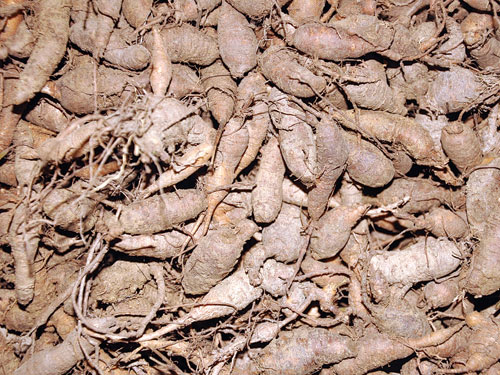 In addition to cassava production in the country, Vietnam also buy fresh cassava from Cambodia to starch processing. However, according to the Ministry of Commerce of Cambodia, in the first 8 months of this year, the country exported only 288 300 tonnes of dried cassava and fresh, worth U.S. $ 15.2 million, down 56% compared to $ 34.5 million USD in the same period last year. Both in 2012, Cambodia exported 722 250 tonnes of dried cassava and fresh, valued at $ 38 million, primarily to markets in Thailand, Vietnam, South Korea and China. Cassava price increases with the processing plants significantly reduced operating capacity has led to increased depreciation costs starch factory continued to increase. As of the end of the month 6/2013, the price of cassava starch factory finished products rose to 10,000 VND / kg. Cassava starch Thailand exports increased continuously in recent years has led to the export price of Vietnam starch increased, although not buying surge. According to the General Administration of Customs, the export price of tapioca end of the month 6/2013 delivered by sea to reach 505-510 USD / t FOB Ho Chi Minh City, up 3% compared to the end of the month 5/2013 and up 20% compared to the end of the month 12/2012. Across the border into China, the end of the month 6/2013 price of cassava starch is 3,100 yuan / ton DAF Tan Thanh border gate, Lang Son, by the end of the month price 5/2013 and up 7% compared to the end of the month 12/2012 .
Consumption of the domestic industry
Manufacturing of animal feed, according to the General Statistics Office, in the first 6 months of 2013, the livestock sector, poultry herd reduction in both output and prices. The production value of the industry grew only 1%, much lower than the 6.9% growth in the same period in 2012 and 4.7% in 2011. Aquaculture industry, the production value is just growth of 1.8%, down sharply from the 6.8% in the same period last year, due to two major product is frozen fish and shrimp are subject to many adverse effects on the export market.
Raising livestock, poultry and aquaculture difficulties have strong impact on production, feed consumption and speed up the inventory level at the production facilities of feed use raw cassava and cassava pulp. In the first 6 months of 2013, production of animal feed rose only 0.4% compared to the same period in 2012. During the first 5 months of 2013, this index increased 0.6%, while inventory levels feed livestock has increased 9.8%. Demand for cassava and cassava pulp slow due for livestock feed and aquatic slow sales, the feed mills to reduce production should reduce demand for raw materials, while the new crop is coming .
Ethanol industry
Vietnam now has six ethanol plants completed construction and will have some more preparation plant construction investment, in order to serve the route E5 bio gasoline use since late 2014 and 2016 E10 , Decision No. 53/2012/QD-TTg of the Prime Minister. However, due to lack of funds and rising prices of raw cassava, while using E5 route to the end of 2014 the new implementation, so the most ethanol plants have closed.
Currently only the Dung Quat oil refinery of Vietnam Oil and Gas Group (PVN) and Tung Lam plant also produces ethanol but not running at full capacity. These plants have alcohol products sold in domestic and export, but is now active in moderation. South Korea, Philippines, Taiwan, Singapore, Thailand, Malaysia, Indonesia is a potential market for Vietnam's export alcohol. According to the General Administration of Customs, the first 5 months of 2013, Vietnam exported $ 45 million worth of alcohol, an increase of 22% compared to the same period in 2012. Among them, the largest South Korean market reaches 15 million and the Philippines reached U.S. $ 13 million.
To solve the problems, the ethanol business has offered state financial aid, and export tariffs to curb sales of cassava chips to China, dedicated to the production of cassava ethanol in water prices material reasonable. However, due to the amount of cassava planted, be sure to consume cassava farmers, so the Ministry of Industry and Trade said that the export tax can not be applied immediately, but to have a specific route. From mid-October is the time of harvest cassava in Thailand massively. In Vietnam, this year's forecast will be hunting season, the Southern East starting from the first harvest in November and Highland will start from the first harvest in December. However, current Quy Nhon port, a port the main export of cassava in Vietnam, the last day of absence to take every ship. Inventory cassava in Vietnam are under pressure due to domestic demand as well as export contracts were lower, while the new crop is coming with high production forecast in addition supply cassava from Thailand and Indonesia also very large.
The stagnation of demand in China has caused many ethanol plants in the country to shut down, a reduced number of remaining capacity, the demand for cassava China fell sharply, while demand cassava for ethanol demand in Korea is not increased, the consumption of cassava products generally will not fluctuate much.
According to the Vietnam Association of cassava, with industrial production and processing of cassava starch as the current standard, if Vietnam to expand its market to European countries, the United States exports and cassava products cassava could reach $ 2 billion / year in the coming years. However, before the situation cassava consumption and declining world demand for raw materials for ethanol production in Vietnam in the coming time will increase, the ability to export cassava and cassava products $ 2 billion milestone is a goal not easily achieved.
Le Xuan


